
Feeding the birds: trouble-shooting
- Feb 7, 2016
- 3 min read
Feeding the birds is usually problem free, bringing hours of joy for only the cost of some seeds and a feeder. However, it’s worthwhile being aware of some of the issues that can come up, just so that you know how to tackle them.

Sick birds often appear fluffed up and lethargic, like this siskin, and are reluctant to fly away Unwanted visitors Feeding the birds pretty much always results in spilled food, which is a tasty temptation to rodents. The odd mouse or vole isn’t much of a problem, as they’re a natural part of your garden’s ecology anyway. But they can become an issue if an excessive amount of spilled food sustains high numbers that then go on to cause damage in the garden, or even invade your house. In some areas, you may even be unfortunate enough to attract rats, and they’re definitely not something to ignore. Try to avoid the issue in the first place by limiting the amount of food you put out. Use well-made feeders with seed trays to avoid lots of spillage, and feed in the morning rather than at night (when rodents are active). If seeds are building up on the ground underneath, you might want to scoop them up and get rid of them. Avoid feeding kitchen scraps and things like bread, particularly if you know you have a rodent problem, and definitely if food is being left at the end of the day. If you’re seeing rats then it’s best to stop feeding the birds altogether and call your local Council for advice. Remember that most rodent traps are meant for indoor use only, and used outdoors, they may trap and kill birds, which is illegal. Another point is to keep your food storage areas tidy, and avoid spillage. My food’s in sturdy plastic boxes, but if rats were around, they’d chew right through that, and I’d have to invest in something metal instead.
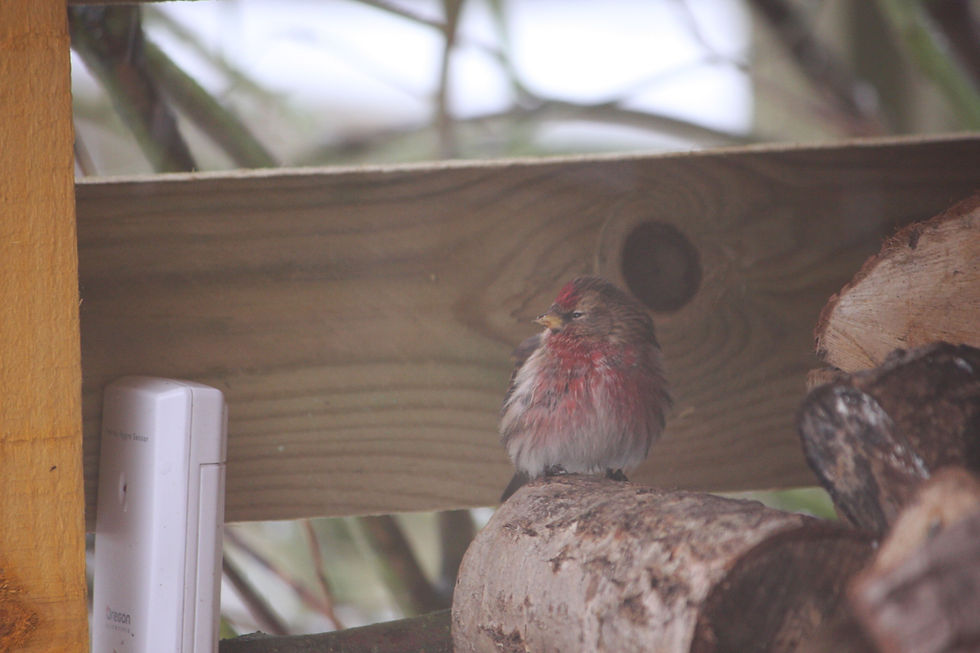
Another thing to look out for with sick birds is messy feathers. This little redpoll doesn't look too well
Sick birds Birds in the wild pick up all manner of bacterial and viral infections, some of which can be transmitted to humans, so I always wash my hands really well after touching my feeders. Some foods we put out can themselves cause birds harm, and if you feed peanuts in particular, you need to make sure that they’re bird-safe. But most problems at feeders come from bird to bird transmission. Think of it this way, if you had a cold, went to a restaurant and sneezed on everyone, you’d likely infect a lot of people. The same thing happens at bird feeders, though mostly with droppings and bird to bird contact. The best thing everyone can do is to keep their feeders clean. Wash them outdoors, wear gloves, and I like to use a specialised veterinary cleaner so that I know it’s safe and effective. There’s advice for all this on the RSPB website http://www.rspb.org.uk/makeahomeforwildlife/advice/helpingbirds/feeding/hygiene.aspx Cleaning feeders is a real pain, but it’s absolutely vital to stop birds getting sick! You’ll also find out quickly whether you’ve bought a good feeder or not, as badly-designed feeders (of which there are a lot…) are difficult to take apart and re-assemble, and can trap food or mucky water. But even with regular cleaning, you may still see sick birds in your garden, or sadly, even dead ones. I find dealing with sick or dying birds to be very distressing, but it is, unfortunately, part of nature. Once a bird is visibly sick there’s usually nothing that can be done to save it, and if you can catch it, then it’s very ill and likely to die. If I find an injured bird, I would always contact the SSPCA to come and collect it, but with sick birds, I usually make the decision to let nature take its course. But what you do, must be your own decision. Again, there’s advice on what to do and what kind of diseases your might see, on the RSPB website http://www.rspb.org.uk/makeahomeforwildlife/advice/helpingbirds/disease/disease-garden-birds.aspx and you can also report any sick birds you see to the BTO, who gather this sort of information: http://www.bto.org/volunteer-surveys/gbw/about/background/projects/garden-wildlife-health If you’ve seen several sick birds, it’s often advisable to stop feeding for a while to let the birds disperse a bit, then clean your feeders really well, and tidy up the ground underneath before putting any more food out. Keep your eyes open for any more signs of trouble, but often these things pass quickly. As I said at the start, feeding the birds is usually a trouble-free activity, and with a bit of care and attention, you can avoid most issues before they start. If you’d like more tips on feeding the birds, see my previous blogs here and here.


Comments